
Understanding How Late Payments Are Reported
A 30-day late payment hits your report immediately once you cross that 30-day threshold. It stays on your credit report for 7 years, constantly reminding lenders that you've missed payments. The score damage is immediate and severe: a person with a 750 score could drop to 670 in a single month just from one late payment.
Set up autopay if you're struggling to remember due dates. For $0 to set up, autopay ensures you never miss a payment again — you can schedule it for the day after payday so you know the money is there. Even a small automatic payment (minimum required or slightly more) keeps you from going 30 days late.
The damage from a late payment fades over time, but not quickly. The first year after reporting is the worst — the late payment is most recent and impacts your score the most. After 2 years, it still matters but less. After 3-5 years, its impact continues to decline. After 7 years, it's gone entirely.
If you went late due to a temporary hardship and haven't missed payments since, consider a goodwill deletion request. Send a letter to the original creditor explaining the situation — job loss, medical emergency, family crisis — and ask if they'll remove it as a one-time professional courtesy. You'll get told 'no' more often than 'yes,' but the cost of asking is a stamp.
The Real Impact on Your Financial Life
Credit repair is fundamentally about managing three factors: accuracy of reports, payment behavior going forward, and aging of negative items. You can't change history, but you can correct inaccuracies, prove you're financially responsible now, and let time fade old damage. Most people dramatically underestimate what's possible because they think accurate negative information is permanent (it fades in power over time).
Start by checking your reports (free at AnnualCreditReport.com), identifying errors, and disputing inaccuracies in writing. While disputes process, focus on new credit behavior: pay every bill on time, reduce existing balances, avoid new hard inquiries. This dual approach of fixing reports while building positive history compounds over months.
An authorized-user account may help or hurt your credit, depending on the reported balance and payment history. Ask the issuer whether it reports authorized users. There is no guaranteed point increase or timing. See FICO’s explanation of authorized-user accounts.
If payments are overdue, contact the creditor to discuss affordable options. Making future payments on time can help build a better payment history, but it does not erase past late payments. Score changes depend on your full credit report and the scoring model.
Strategies for Dealing with Existing Late Payments
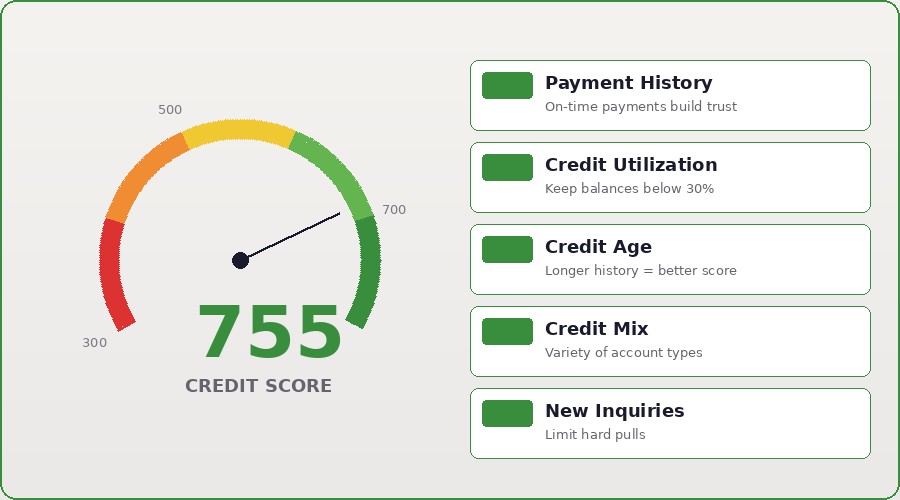
Your payment history is 35% of your FICO score — the single biggest factor. A single 30-day late payment can drop your score 60 to 110 points depending on your starting score and credit profile. Go 60 days late and you're looking at 110 to 160 point drops. At 90 days, the damage is even worse, and by 120 days you're heading toward a charge-off.
The credit bureaus have different reporting tiers: 30 days late, 60 days late, 90 days late, 120+ days late. Each tier signals increasing risk to lenders. A 30-day late shows you struggled with a payment. A 90-day late shows you've abandoned the debt. The longer you go without paying, the worse the damage to your creditworthiness.
If you're running late, call the creditor immediately. Many lenders will allow a one-time courtesy extension or deferment if you ask before you miss the payment. Once you're 30 days late, the damage is done, but staying in communication can sometimes prevent them from reporting it to the credit bureaus (though this is rare). At minimum, you want to stop the bleeding and get caught up before it hits 60 days.
Goodwill letters are your best friend for older late payments. If you've been on time for the last 6-12 months after a late payment, write to the creditor explaining your situation and asking them to remove it as a one-time courtesy. Some lenders will delete it, some won't, but it costs nothing to ask. The credit reporting companies will respect the lender's decision to remove it if they choose to.
Building a Clean Payment History Going Forward
Good credit repair isn't a single move — it's a comprehensive approach combining multiple strategies simultaneously. Check your reports for errors (dispute inaccuracies), reduce balances (payment history and utilization), become an authorized user on positive accounts (mix and age), stay current on all new payments (the most important factor), and wait for negative items to age (time heals credit wounds).
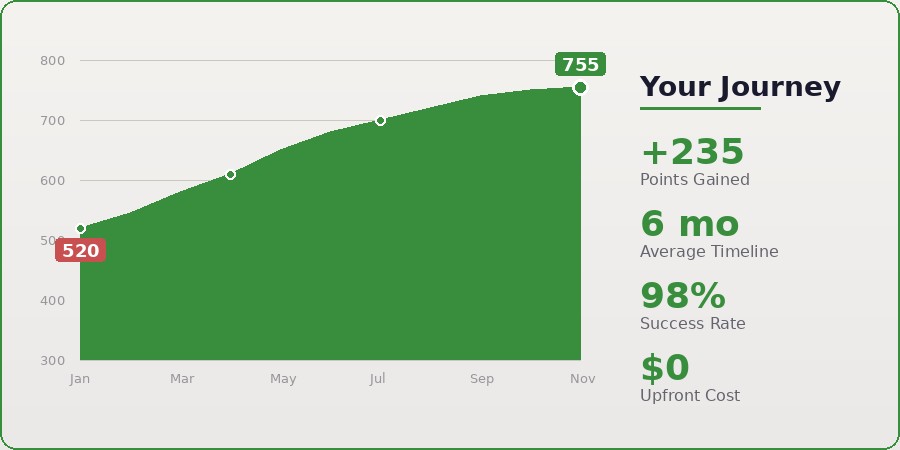
Credit-report updates and score changes take different amounts of time. A corrected error or lower reported balance may affect a score after the bureau receives the update. No particular score increase or completion date is guaranteed.
You can dispute inaccurate, incomplete, duplicated or outdated information for free. Accurate, current negative information generally cannot be removed simply because it hurts your score. See the CFPB’s explanation of credit-report corrections.
You may choose professional help with reviewing reports and organizing disputes, but you can dispute errors yourself for free. Before hiring a provider, compare its written services, fees and cancellation terms. Avoid promises of guaranteed removals or score increases.