
Federal Laws That Protect Texas Consumers
Federal credit laws are stronger than most people realize. The FCRA allows you to dispute inaccurate information at no cost. The FDCPA makes debt collection a minefield for collectors if they don't follow procedures exactly. The CROA cracks down on credit repair scams. Knowing your rights turns the tables from creditors being in power to you having real protection.
The FCRA requires credit bureaus to provide free reports annually, investigate disputes within 30 days, and remove inaccurate information. If they fail these requirements, you can sue. Max damage is $1,000 per violation plus attorney fees. Hundreds of FCRA lawsuits are filed annually by people with legitimate claims. If a bureau ignores your dispute or removes your name wrong, you have legal recourse.
The FDCPA gives collectors no wiggle room. They can't call before 8 AM or after 9 PM (even weekends). They can't contact your workplace without permission. They can't contact you if you've sent a written request to stop (cease and desist letter). They can't harass, threaten, or make false statements about the debt. Violating these rules means statutory damages of $1,000 per violation plus your actual damages.
The CROA makes it illegal for credit repair companies to charge upfront before delivering results, to misrepresent what they can do, or to prevent you from contacting the credit bureaus directly. They must give you a written contract, let you cancel within 3 days, and operate with full transparency. Violating CROA is a federal crime. If a company breaks these rules, sue them.
Texas Credit Services Organizations Act
Texas economy is diverse: oil and gas, tech, agriculture, manufacturing. Economic downturns in any sector hit credit scores of affected workers. 2015 energy crash, 2020 pandemic shutdowns, and regular business cycles all create credit casualties. What matters is recovery, and Texas law gives you tools to recover.
Texas generally protects current wages from garnishment for ordinary consumer debts. Exceptions apply to certain obligations, including support, taxes and some student loans. Bank-account collection follows different rules. See the Texas State Law Library’s debt-collection guide and get legal advice for your situation.
Credit repair in Texas involves knowing both federal law (FCRA, FDCPA, CROA) and Texas-specific rules (TCSOA, wage garnishment limits, homestead exemptions). A good Texas credit professional understands both and uses both to build the best strategy for your situation. DIY is possible but having local expertise helps.
Whether you're in San Antonio, Dallas, Houston, Austin, or a smaller Texas city, credit repair principles are the same: fix reports, build positive history, and let time heal. The details vary — Austin's tech economy is different from Houston's energy sector — but the core strategies work statewide. Reach out to 755CreditScore at 832-696-0755 for a free consultation.
What Credit Repair Companies Can and Cannot Do
Credit repair is fundamentally about managing three factors: accuracy of reports, payment behavior going forward, and aging of negative items. You can't change history, but you can correct inaccuracies, prove you're financially responsible now, and let time fade old damage. Most people dramatically underestimate what's possible because they think accurate negative information is permanent (it fades in power over time).
Start by checking your reports (free at AnnualCreditReport.com), identifying errors, and disputing inaccuracies in writing. While disputes process, focus on new credit behavior: pay every bill on time, reduce existing balances, avoid new hard inquiries. This dual approach of fixing reports while building positive history compounds over months.
An authorized-user account may help or hurt your credit, depending on the reported balance and payment history. Ask the issuer whether it reports authorized users. There is no guaranteed point increase or timing. See FICO’s explanation of authorized-user accounts.
If payments are overdue, contact the creditor to discuss affordable options. Making future payments on time can help build a better payment history, but it does not erase past late payments. Score changes depend on your full credit report and the scoring model.
Spotting Illegal Credit Repair Practices
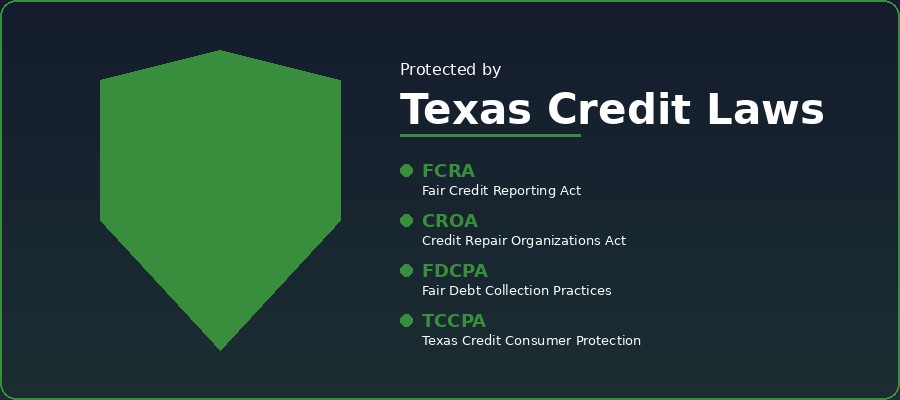
The Fair Credit Reporting Act (FCRA) protects you from inaccurate credit reports and unauthorized inquiries. The Fair Debt Collection Practices Act (FDCPA) protects you from collector harassment. The Credit Repair Organizations Act (CROA) protects you from credit repair scams. Texas Credit Consumer Protection Act (TCSOA) adds state-level protections. Together, these laws give you serious ammunition against predatory practices.
Red flags of credit repair scams: upfront fees before any work (illegal), claims they can remove accurate negative information (impossible), claims of special 'secret methods' to remove accurate items, guaranteed score improvements, and pressure to sign quickly. Legitimate credit professionals charge reasonable ongoing fees, give you honest timelines, and only promise to dispute inaccurate items.
The CROA has a 3-day cancellation right: you can cancel with any credit repair company within 3 days and get a full refund. The company must provide you a written cancellation form, a description of your rights, and a copy of any contract. If they don't, they're violating federal law and you have grounds to sue them.
The FDCPA explicitly prohibits collector harassment: no calls before 8 AM or after 9 PM, no contact with your employer, no threats of arrest or jail time, no unlimited phone calls, no false representations of authority. Validate the debt within 30 days and collectors must prove they own it. Sue for damages if they violate these rules — many lawyers take FDCPA cases on contingency.
755CreditScore: Compliant and Transparent
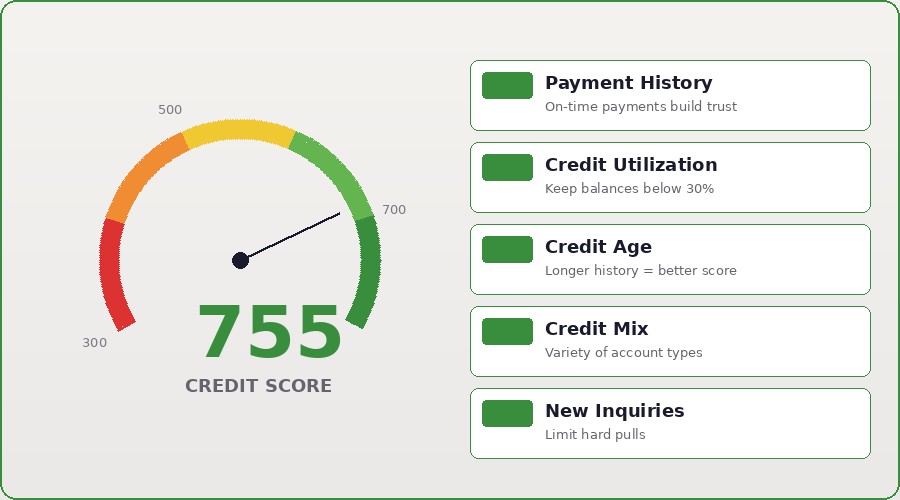
Good credit repair isn't a single move — it's a comprehensive approach combining multiple strategies simultaneously. Check your reports for errors (dispute inaccuracies), reduce balances (payment history and utilization), become an authorized user on positive accounts (mix and age), stay current on all new payments (the most important factor), and wait for negative items to age (time heals credit wounds).
Credit-report updates and score changes take different amounts of time. A corrected error or lower reported balance may affect a score after the bureau receives the update. No particular score increase or completion date is guaranteed.
You can dispute inaccurate, incomplete, duplicated or outdated information for free. Accurate, current negative information generally cannot be removed simply because it hurts your score. See the CFPB’s explanation of credit-report corrections.
You may choose professional help with reviewing reports and organizing disputes, but you can dispute errors yourself for free. Before hiring a provider, compare its written services, fees and cancellation terms. Avoid promises of guaranteed removals or score increases.