

The Honest Answer: It Depends
If a company tells you exactly how many days it'll take to fix your credit before they've seen your report, be careful. The honest answer is that it depends on what's on your report and why.
For most people, meaningful progress shows up in three to six months. Simple cases — a couple of inaccurate items or one stubborn collection — can move faster. Complex situations with multiple charge-offs, old collections, and identity-theft cleanup take longer.
What never changes is the process. Credit bureaus are legally required under the Fair Credit Reporting Act to investigate disputes, usually within 30 days. That investigation window sets the rhythm of every repair timeline.
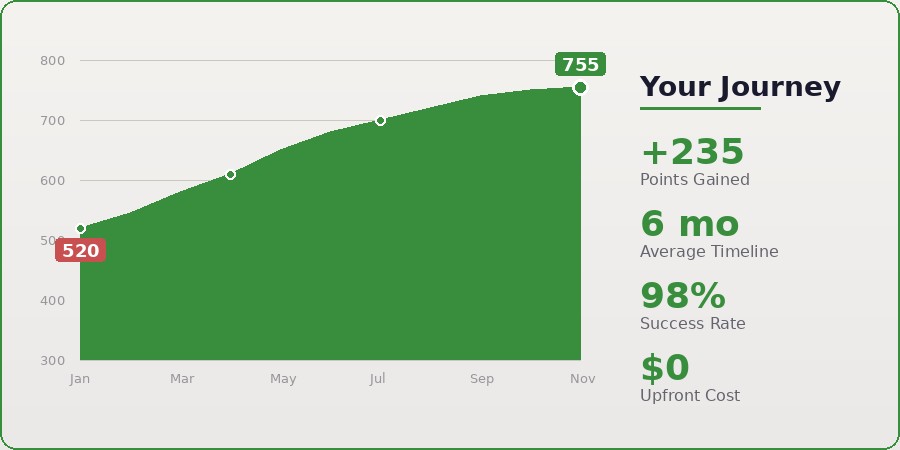
A Realistic Month-by-Month Timeline
Month 1: We pull and review your full credit report from all three bureaus, identify inaccurate or unverifiable items, and send the first round of disputes. You typically won't see score movement yet — this is the groundwork.
Months 2–3: Bureaus respond to the first disputes. Inaccurate items start coming off. This is usually where clients see their first score gains, especially when a collection or late payment is removed.
Months 3–6: We send follow-up disputes on anything that wasn't resolved, escalate where needed, and work on the positive side — utilization, payment consistency, and credit mix. Scores tend to climb steadily here.
Beyond 6 months: For tougher cases, we keep escalating and documenting. Many clients reach their goal in this window and shift into maintenance mode.
What Speeds Things Up
Accurate, well-documented disputes. The clearer the case that an item is wrong or unverifiable, the faster it tends to resolve.
Paying down revolving balances. Lowering utilization can lift your score within one billing cycle — often the fastest single win available.
Staying current. Every on-time payment during the process builds positive history and protects the gains we make.
Responding quickly. When we need a document or a signature from you, fast turnaround keeps the dispute clock moving.
What Slows Things Down
Lots of legitimate negative items. If the information is accurate and properly reported, it generally can't simply be erased — time and rebuilding do the work.
New late payments during the process. Fresh damage can offset progress, which is why staying current matters so much.
High balances left untouched. Disputes can clean up errors, but high utilization will keep a lid on your score until it comes down.
Re-aged or re-inserted items. Sometimes a removed item reappears and has to be disputed again, which adds a cycle.

Beware Anyone Promising Overnight Results
No legitimate company can guarantee a specific score by a specific date, and under federal law no one can charge you before services are performed. Anyone promising to delete accurate, verifiable information — or guaranteeing a 'new credit identity' — is selling something that can get you into trouble.
Real credit repair is the disciplined use of rights you already have under the FCRA and FDCPA: the right to accurate reporting and the right to dispute what isn't. It's methodical, not magic.
The upside is that the results are real and they last, because they're built on a clean, accurate report rather than a temporary trick.
How We Approach Your Timeline
At 755CreditScore, we start every engagement by reviewing your actual report and giving you a straight assessment — what we expect to move, roughly how long it should take, and what's realistic for your situation.
We've spent more than ten years helping over 4,500 Houston-area clients, and we'd rather set an honest expectation than an exciting one we can't keep.
Book a free consultation and we'll walk through your report together. You'll leave knowing what your timeline actually looks like — no guesswork, no pressure.