
Understanding How Late Payments Are Reported
A 30-day late payment hits your report immediately once you cross that 30-day threshold. It stays on your credit report for 7 years, constantly reminding lenders that you've missed payments. The score damage is immediate and severe: a person with a 750 score could drop to 670 in a single month just from one late payment.
Set up autopay if you're struggling to remember due dates. For $0 to set up, autopay ensures you never miss a payment again — you can schedule it for the day after payday so you know the money is there. Even a small automatic payment (minimum required or slightly more) keeps you from going 30 days late.
The damage from a late payment fades over time, but not quickly. The first year after reporting is the worst — the late payment is most recent and impacts your score the most. After 2 years, it still matters but less. After 3-5 years, its impact continues to decline. After 7 years, it's gone entirely.
If you went late due to a temporary hardship and haven't missed payments since, consider a goodwill deletion request. Send a letter to the original creditor explaining the situation — job loss, medical emergency, family crisis — and ask if they'll remove it as a one-time professional courtesy. You'll get told 'no' more often than 'yes,' but the cost of asking is a stamp.
The Real Impact on Your Financial Life
Credit repair is fundamentally about managing three factors: accuracy of reports, payment behavior going forward, and aging of negative items. You can't change history, but you can correct inaccuracies, prove you're financially responsible now, and let time fade old damage. Most people dramatically underestimate what's possible because they think accurate negative information is permanent (it fades in power over time).
Start by checking your reports (free at AnnualCreditReport.com), identifying errors, and disputing inaccuracies in writing. While disputes process, focus on new credit behavior: pay every bill on time, reduce existing balances, avoid new hard inquiries. This dual approach of fixing reports while building positive history compounds over months.
Add yourself to positive accounts as an authorized user if possible. Family or friends with excellent credit and high limits can add you to their account. Their payment history and age show up on your report, boosting your score instantly by 50-100 points in many cases. There are no downsides if the primary account holder has perfect payment history and low utilization.
Becoming current on all accounts is critical. Stop the bleeding first. If you have delinquent accounts, get current immediately. One month of current payments doesn't erase the delinquency history, but it stops the daily credit score damage. After 3-6 months of current payments on previously delinquent accounts, you'll see significant score improvements.
Strategies for Dealing with Existing Late Payments
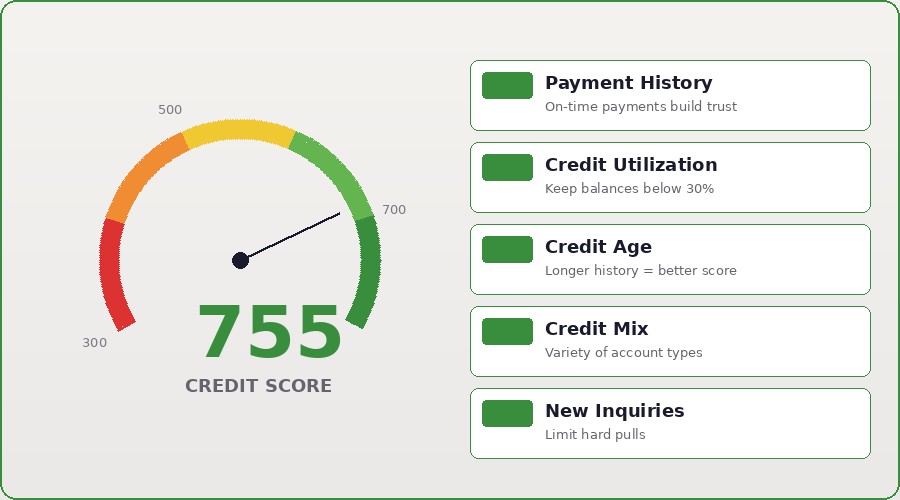
Your payment history is 35% of your FICO score — the single biggest factor. A single 30-day late payment can drop your score 60 to 110 points depending on your starting score and credit profile. Go 60 days late and you're looking at 110 to 160 point drops. At 90 days, the damage is even worse, and by 120 days you're heading toward a charge-off.
The credit bureaus have different reporting tiers: 30 days late, 60 days late, 90 days late, 120+ days late. Each tier signals increasing risk to lenders. A 30-day late shows you struggled with a payment. A 90-day late shows you've abandoned the debt. The longer you go without paying, the worse the damage to your creditworthiness.
If you're running late, call the creditor immediately. Many lenders will allow a one-time courtesy extension or deferment if you ask before you miss the payment. Once you're 30 days late, the damage is done, but staying in communication can sometimes prevent them from reporting it to the credit bureaus (though this is rare). At minimum, you want to stop the bleeding and get caught up before it hits 60 days.
Goodwill letters are your best friend for older late payments. If you've been on time for the last 6-12 months after a late payment, write to the creditor explaining your situation and asking them to remove it as a one-time courtesy. Some lenders will delete it, some won't, but it costs nothing to ask. The credit reporting companies will respect the lender's decision to remove it if they choose to.
Building a Clean Payment History Going Forward
Good credit repair isn't a single move — it's a comprehensive approach combining multiple strategies simultaneously. Check your reports for errors (dispute inaccuracies), reduce balances (payment history and utilization), become an authorized user on positive accounts (mix and age), stay current on all new payments (the most important factor), and wait for negative items to age (time heals credit wounds).
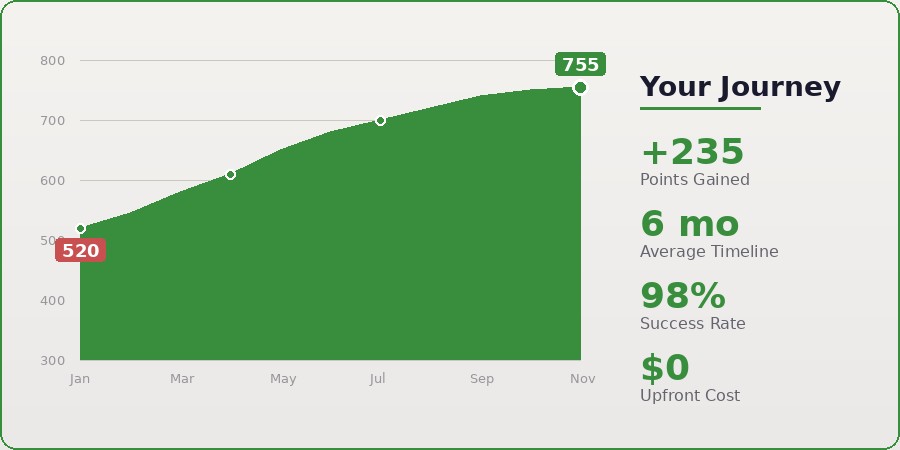
The timeline for visible results is 3-6 months if you're aggressive. If you dispute errors, you might see those removed in 30-90 days. If you pay down balances, your score improves within 1-2 billing cycles. If you get added as an authorized user, that score boost happens instantly. The compounding effect of multiple moves gives you 50-100 point improvements relatively quickly.
Realistic expectations: you can't remove accurate negative information, but you can dispute inaccurate items. You can't make old items disappear (but their impact fades over time). You can build a positive credit file starting today. Recovery from 450 credit to 700 credit typically takes 18-36 months with consistent action. It's not overnight, but it's absolutely achievable.
Work with credit professionals if DIY isn't moving the needle. Good credit repair companies combine dispute expertise, creditor negotiation skills, and strategic guidance. Legitimate companies charge ongoing fees (not upfront), give honest timelines, and focus on disputing inaccuracies and negotiating with creditors. The cost is worth it if it saves you months of effort and adds years to your credit recovery timeline.

How 755CreditScore Can Help
Credit repair is fundamentally about managing three factors: accuracy of reports, payment behavior going forward, and aging of negative items. You can't change history, but you can correct inaccuracies, prove you're financially responsible now, and let time fade old damage. Most people dramatically underestimate what's possible because they think accurate negative information is permanent (it fades in power over time).
Start by checking your reports (free at AnnualCreditReport.com), identifying errors, and disputing inaccuracies in writing. While disputes process, focus on new credit behavior: pay every bill on time, reduce existing balances, avoid new hard inquiries. This dual approach of fixing reports while building positive history compounds over months.
Add yourself to positive accounts as an authorized user if possible. Family or friends with excellent credit and high limits can add you to their account. Their payment history and age show up on your report, boosting your score instantly by 50-100 points in many cases. There are no downsides if the primary account holder has perfect payment history and low utilization.
Becoming current on all accounts is critical. Stop the bleeding first. If you have delinquent accounts, get current immediately. One month of current payments doesn't erase the delinquency history, but it stops the daily credit score damage. After 3-6 months of current payments on previously delinquent accounts, you'll see significant score improvements.